Thursday, February 13, 2014

The Tale for the Time Being

A Tale for the Time BeingA Tale for the Time Being by Ruth Ozeki
Nao is the type of girl who immediately makes you here friend. Though an outcast, dislodged in time and space, and -within her own world - society, she writes with an honesty and sincerity that grabs hold of the reader and pulls them in. Nao and I were, from the start, friends. And she refers to the reader as such, as she goes along - writing to the invisible someone who maybe, just maybe, is reading her thoughts so many years down the line. For her it does not matter who, or when, merely that you are there.

Ruth, is a reader like us. Having found Nao's diary awash in the sea, she forms what she feels to be a unique and solitary bond with the unknown teenage girl, reading her words as though the very act my bring life to her - save her from what seems to be the inevitable tragedy of her life.
Both reader and writer need each other - giving each other purpose, and therefore life, and Ozeki uses this relationship to her advantage as we as the public readers gain a sense of purpose in our own reading of the novel.

Real, in both her pain and her triumphs, Nao is the inner self, in many ways, her ever wise and peaceful Jiko, the outer. and we are as Ruth, caught somewhere in between, desperate to pull both together and save each.

While the novel holds a nice level of mystery and what is -in my own opinion - the poetic tragedy of uncertainty in that Ruth will never know for certain who Nao is or was, and what became of her life, the novel takes a turn which alters this. As we progress, there is a sense of fantasy with regards to the very words on the pages of the diary - as they appear and disappear. For me, this was a flaw in the flow of the reader/writer connection for although it elaborated on the importance of one upon the other, it took away the authenticity by applying it to an un-real and therefore removed form. While ghost, powers, and mystery certainly have their place,e and were used effectively in the novel, this one inexplicable aspect seemed not only odd, but unnecessary, and thus diminishing.

Still an intertwined tale of human dependency, A Tale of the Time Being challenges questions of time, space, and human form as writing transcends these planes to pull people together.


Monday, February 3, 2014

Girlfriend in a Coma

Girlfriend In A ComaGirlfriend In A Coma by Douglas Coupland

Coupland is, truly, an incomparable author. Strange to be sure, his followers and fans range in opinion over what makes his works master-pieces, or failed attempts. Girlfriend In a Coma, titled after the song of the same name by the Smiths, this 1998 semi-futuristic novel strikes a fine balance between the minute realities of life, and the cosmic tragedy of apocalypse and has been widely referred to as one of his finer novels. It is masterful how Coupland can target the very essence of mundane life within the teenage characters who ground and narrate the majority of the novel - following them through the struggles of teen years, aging, and coming to terms with themselves, while weaving an eerily futuristic and socially critical world of comas, dreams, and end times.

The novel is split between three major points in time, and is told through 3 different narraters.

The first is narrated by a character well known to the other characters of the novel, and yet never fully known by the reader. Jared, introduced post-humulously, narrates in the voice of a deceased 17 year old 'ghost' for lack of a better word. The novel then switches to the point of view of main character Richard, as he narrates life after the coma, and everything that follows.
Following sections are told without the use of a narrator, only to return, in the final chapters, to the voice of 'spirit' Jared, again, to round of the novel.

It is in both the plot and the narrative itself, then, that Coupland plays with this balance between what is ordinary and real, and what is fantasy. As stated in an earlier review from the Times, it is "a disturbing, thought-provoking and moving novel. Girlfriend in a Coma has something of the quality of a fairytale, but it contains a sharp realism that makes the book scarily contemporary" (15 May 1999).

It is this focus on the individuals - the somewhat 'every-man' quality of Richard, kind caring and lost within himself - and the realism inherent in mundane life, that prevents the story from flying from the page in a whirlwind of disbelief as conceptual elements such as visions, ghost narrators and global doom hang over the plot.

Coupland's strength, of course, is in capturing the spirit of everyday people, his characters ever believable, relatable and -though flawed- thereby loveable. We want desperately for Richard to succeed, and yet we revel in his faults and failures, seeing in him the very same flaws we too possess. His devotion, too, to Karen - and indeed Coupland's devotion and attention to a character that is, essentially, off screen for the majority of the novel - is both endearing and intriguing, as it shows a measure of love and kindness we as readers both long for, and would like to think we too possess. It is a testament to Coupland's writing that he is able to make the reader continue to love and care for Karen despite no direct presence. Merely a background character, silent, she remains the fixture around which the story evolves and collapses.

For me it is the relationships, the honesty, and the simple realities, that make this story. Adding in the Canadiana so often found in Coupland's work - Girlfriend In a Coma takes place in his own city of Vancouver - the story became all the more real for me as I related to names and places. His detail with street names and landmarks foster a sense of familiarity that although specific to an actual location, allows the reader to feel as though they know the place - it is their own home town - whether or not they have been there. I, at least, found this to be true. For although I am Canadian, and take pleasure in the (often uncommon in popular literature) Canadian setting, I've never been to Vancouver. And yet, I felt I had. Simple detail, pulling you in to the story, allowed for a solid foundation upon which the reader could stand and therefore more readily accept the more fanciful concepts that are the hallmark of Coupland's dystopias and criticisms of the modern world.

A fast, quick read, Coupland with have you both connecting with his endearing characters, and questioning the very format of the world in which you live. At once acutely real and vastly fantastic, the pages will continue to turn as you follow the halting, tragic and - occasionally triumphant band of friends struggling their way from adolescence to adulthood only to find its really one and the same.

“there are three things we cry for in life: things that are lost, things that are found, and things that are magnificent.”


Wednesday, January 8, 2014

The Hundred Year Old Man

My first, and only major qualm with The Hundred-Year-Old-Man was it's branding. On the back cover, (off my copy at least) is the tag line "it's never too late to start over". This implied a lovely story of a homely old man who suddenly decides though being aged beyond the average, he's ready for a bit of an adventure. mr Karlsson, however, is not an adventure-less homebody. A Swedish dynamite expert unwittingly tangled in politics, science and major events of history throughout the past 100 years, Karlsson's life was and and has been, remarkable. 

The novel writes with a wit and clarity that is both humorous and honest, immediately pulling in the reader as you learn about both Karlsson' current adventure - on the run from the senior's home whose window he's climbed out of - and his younger years, globe trotting and generally causing great pleasure and chaos all around him. 

A wonderful novel of character, friendship, and a great deal of history - albeit presented in an unusual (and dare I say far more interesting) manner, The Hundred-Year-Old-Man who Climbed out the Window and Disappeared is a great success of a novel, well suited to anyone looking for something a little off beat, quirky or down-right weird. Challenging both our ideas of age, and it's limitations, as well as the dichotomies of right and wrong, Jonasson blurs humour and tale with deep rooted realities and questions of humanity.

Friday, December 13, 2013

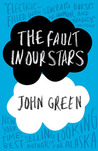
The fault in Our Stars

The Fault in Our StarsThe Fault in Our Stars by John Green
Raw.
It's a word I admittedly overuse when i find a piece of literature that is, in fact, not over processed, overly pretentious or trying too hard - as books an do. The fault in Our Stars -which I finally succumbed to reading after much hype by blogging fans for ages - is raw in a very poignant way. The fault in our stars is certainly romantic, and in it's romance dances into the idealistic forms of love - I won't spoil it for potential readers, but there's a level of convenience inherent in the way romantic love plays out within the novel - but it does generally keep itself honest and real. Hazel Grace, our 16 year old main character, is a thoughtful, interesting - odd - but very much teenager main character. While her cancer makes her whole unique from your average teen, Green does a great job of exemplifying that she is, in turn, just as teenagerly, and just as much the same as any other non cancer inflicted individual. We are all human, finite, and experience pain and loss.
But the depth and clarity with which Green address cancer - the "suckyness" of it, the agony that really isn't brave, but breaking and sad - not tragic or poetic - just sad, adds so much merit to the tale.

While there are moments where Green pulls aspects of the 'cancer story' he is careful to tell Hazel's story - and individual tale of a young girl who happens to have a fatal disease, rather than the story of Cancer, featuring Hazel Grace. The novel itself focusing around this distinction, determined to illuminate the humanity and normalcy of people while at the same time taking nothing away from the sheer unfair awfulness that is growing up with Cancer. Hazel is real, she is 'raw' and she is likeable, even in her sometimes depressing realism. The reader immediately grows to like her, is invested, and I myself found the novel an exceptionally quick read.

A well written story of friendship and love, sickness, fatality and the coming to terms with the fact that we all, one day, must die. And while we may have but a short time together, that time - those moments, can be infinite.

Tuesday, December 10, 2013

The Year of the Hare

An adventurous tale of a man who, in a moment of haphazard rebellion, leaves his life behind in pursuit of something real again. Vatanen, a (former) journalist hits a young hare on a trip through the countryside one evening with his photographer. In that split second, his life is flipped upside down, as the frailty, beauty and innocence of nature becomes so very evident. Leaving behind the cities and confinements, Vatanen forges ahead into the wilderness where he encounters a series of odd adventures, miscellaneous labour jobs, and astounding characters, all the while conveniently fleeing his former life. 
A story about living life to it's fullest, and getting back to nature, The Year of the Rabbit holds the true spirit of a rebel, a countrymen, and one not confined by conformity or convention. 
written in the 1970's, the pure sense of simple living, adventure and companionship still rings true. Vatanen's will power and curiosity keep the pages turning as the straightforward style of story telling paints the picture of a year more full than a whole lifetime of urban living. 

Monday, December 2, 2013

One Hundred Years of Solitude

I essentially read this book because it's on every list of Books One Should Read Before They Die, and it sounded far more interesting than many of the extremely old 'canon' pieces of yonder years that inevitably take up prominent spots on such lists.
..
well, it was certainly not in the 18th Century style, but that didn't mean it wasn't a bit drawn out, halting and muddled.
To be honest I think the main issue was the characters were flippant within the story, passing in and out at random, unfixed in time on occasion, and confusing not only chronology, but relations and generations. This was not helped by the fact that every male in the novel of the Buendía family has (essentially) on of two names, either Aureliano or (Jose) Arcadio. it's a bit confusing. Granted, I see the significance of this odd narrative, and of the repeat of names, as history was seen to be circling back on itself, patterns in generations repeating and overlapping and confusing one another. In this way, the novel was brilliantly successful in mirroring life in narrative. However, it didn't make it particularly comprehensive, and I often found myself less engaged than I would have liked to be.

At it's core, 100 years of Solitude is a recounting of the history of one family- occasionally with meaningful, heartfelt stories, sometimes in minute detail, but often illuminating love and solitude, and the partnership that these feelings often share. The novel to me became the recounting of the latest 'ursula' or 'remedies' or 'aureliano' (yes many of the daughters were named after mothers or grandmothers as well), who they slept with - often wildly inappropriately, or out of sheer solitude, any resulting children, and a spiral into quiet sad solitude. This pattern, repeated again and again, had the markers of deep life lessons, but also became somewhat tedious for the reader.

in essence, I appreciated the novel, but I did not, in the end, find it overly engaging, moving or 'entertaining'. Rather it was dirty, real, unpolished poetry, which at times lagged, and at time showed glimpses of both the purity, and dark twisted animalisms that form the basis of humanity.

Tuesday, October 1, 2013

The Understudy

The Understudy, by David Nicholls (One Day, Starter For Ten) is a painfully realistic tale about one Steven C McQueen, a pained divorcee, struggling actor and hopelessly unlucky understudy to the increasingly famous and dreamy Josh Harper. Steven is an endearing character. Real, flawed, and often foolish, we follow his naively optimistic dreams of making it big in the world of theatre. The reality, of course, is that Steven is floundering along, too old to still be waiting for his big break, slowly sinking beneath the shadow of the stars.

But when Steven inadvertently mistakes Josh's job offer of catering services as a personal party invitation, Steven's life is shot into the twisted glamourous and yet oh so dark world of fame. It is Nora, Josh's wife, that really does it for Steven. One chance meeting and they fall quickly into a strange and loaded friendship as Steven becomes Josh's confidant. Caught between spouses, making friendships with those he envies, Steven struggles to navigate through a life continually riddled with ever increasing disappointment.

Nicholls' dark dry humour paints the scene for Steven's self deprecation and careful optimism, countered with the brash roughness of Nora's New York style which (not so delicately) highlights the rough side that is fame and fortune. One reaching for the dream, the other a grounding sense of reality, Nicholls expertly manoeuvres his way through the busy London streets, debaucherous start studded after parties, and rundown apartments engaging the reader with a sense of hoping and looming misfortunate. A real, human story, one cannot help but invest their own aspirations, disappointments and veiled selfish desires in Steven, and thus, connect wholeheartedly with his story.