Showing posts with label literature. Show all posts

Thursday, June 11, 2015

We Are All Completely Beside Ourselves

We Are All Completely Beside OurselvesWe Are All Completely Beside Ourselves by Karen Joy Fowler

We are all completely beside ourselves by Karen Joy Fowler is a brilliant depiction of both science and humanity, or rather the contradictions between what we can analyse and what is simply just being.

The story follows the Cooke family: one mother one father, one brother and two sisters. It is narrated by the youngest sister, Rosemary, with its primary focus being on her sister Fern who is, in fact, a chimpanzee. While the novel, like my review, does not immediately reveal that Fern is an ape, it is impossible to review the story, as it is impossible to tell it, without eventually revealing this fact. It is the reluctance, and conversely the need to share this aspect that strikes at the very core of the novel.

Fern is at once a sister, a family member, a loved one -Same and yet also non human, other, an outsider -NotSame. For Rosemary, despite Fern being an ape, there was no other that understood her or that she understood with such certainty as she did Fern.

Fowler expertly combines aspects of the scientific and of case studies - experiments with the grad students, endless notes and theories, with childhood memories and family dynamics inductive of any so-called normal American family. It is with expert skill that she paints Fern as simultaneously subject and family member. It is this paradox that forms the conflict of the novel, and of Rosemary's life in general. While social norms and public opinion portray chimps as simply animals -wild and unpredictable - there is a sense, for the Cookes, that Fern is a vital part of their family dynamic. Truly one of them in so many indefinable ways.

A heartfelt and moving tale, Fowler opens the readers eyes to new possibilities, highlighting interspecies connection without shying away from the devastation, heartbreak, cruelty and confusion that come with bringing a wild animal into a home. Touching on various aspects of behavioural theory - of both apes and humans alike - Fowler challenges our understanding of psychology and behaviour, rights and privileges.

A stunning and emotional novel, We Are All Completely Beside Ourselves is a beautiful take of man's need to know, to understand and our ultimate inability to do so.


Wednesday, June 10, 2015

Hey, Nostradamus


Cheryl is the epitome of teenage piety, her purity running deep and steadfast with a stubbornness indicative of any 17 year old. Jason is everything his father isn't. Impulsive, worldly and antisocial he forges his own way blindly and wholeheartedly, trusting in the love and bond he shares with his girlfriend Cheryl.

This story is about them, and wholly not about them. It is at once a coming of age tale and a commentary on society at large. Focusing on relationships - and especially the familial kind - Hey, Nostradamus explores the complexities of the connections forged through necessity and life experiences. The difference between families we are born into and cannot fully escape, and those we seek out to spend our lives with. It is about innocence, and guilt. Avoidance and acceptance, and above all the overriding presence of Something Else. Of God, of spirituality, or simply of the contemplation of such ideas.

Coupland, as always, has an art for weaving religious or spiritual tones throughout his work in an accessible and unchallenging way. He manages to make the reader question thoughts of morality, sin, innocence and human behaviour without bogging down the narrative. Despite heavy subject matter, -destruction, catastrophe and violence are, as is common for Coupland - evident early on in the novel, the text remains a quick and easy read as it deals with dark subject matter in a frank and instinctively human way. This honesty allows the reader to be honest about their own emotions and beliefs, forming a bond between text and reader without enforcing ideologies onto him or her. It is the honesty and the boldness, never sugar coating events or feelings, that makes Coupland such a wonderful author to read. His tales however outside your realm of circumstance become feasible or relatable in the very reactions characters have to them: ones that by little stretch of the imagination could have been yours.

Furthermore the style of the novel is such that we are part of each narrators mind - starting with Cheryl who speaks so calmly and retrospectively - who draws the reader in with compassion and intrigue alike.

A wonderful balance between family relations, the darkness of a world under siege and the guilts of growing up and accepting or rejecting your parents teaching, "Hey, Nostradamus" is a truly excellent read and a great marker of famous Coupland style.


Thursday, May 7, 2015

The Girl Who Saved the King of Sweden

The Girl Who Saved the King of SwedenThe Girl Who Saved the King of Sweden by Jonas Jonasson
Jonas Jonasson's second novel, The Girl Who Saved the King of Sweden, is, like its forerunner, a vastly entertaining - and uniquely humourous - (miss)representation of the various adventures and mishaps that shape the face of history. Expertly intertwining main character Nombeko's modest South African roots with the lofty and politically charged goings on of kings, prime ministers, and presidents, Jonasson forms a tale both wildly unbelievable and perfectly natural.

There is something to Jonasson's humour that allows for catastrophe after catastrophe with ease and interest, rather than turning the tale into a frustrating sequence of implausibility. Hapless and exceptionally idiotic Holger One and Celestine form the perfect unintentional adversaries to thoroughly brilliant Nombeko and Holger Two. And with a political agenda passed from a mentally unstable father to unwitting sons, the novel has all the ingredients characteristic of Jonnason's winding tales. The narrative plays on a mixture of perfect accidents, terrible bad luck, and outstanding circumstances in order to tell - simultaneously - the personal stories of his unique characters, and the overarching national and worldwide politics. Of course there is also the matter of an atomic bomb.

Like his first novel, Jonasson's second maintains the stylings and humour indicative of his writing, and spins an uncanny trail of destruction into the perfect obscure tale of adventure, all the while providing characters you love, those you love to hate, and the Jonasson staple: the bumbling yet endearing fools.

Wednesday, February 25, 2015

Under the Hawthorn Tree

Under the Hawthorn TreeUnder the Hawthorn Tree by Ai Mi
Under the Hawthorn Tree, by Ai Mi, started off with promise. A young Chinese girl named Jingqui, naive but smart, is sent off into the villages to document life in order to write more accurate history textbooks. Set in China in the 1970's the book is heavily rooted in the cultural revolution. Interest is peaked. A tale is told of a hawthorn tree with flowers dyed red from the blood of soldiers. The backdrop is set with an old folktale of a maiden torn between two loves. I wasn't 100% which way the story would go, but I expected some sort of excitement, really.

The downfall of Under the Hawthorn tree, though, was that it really wasn't all that gripping. Little happens in terms of drama and plot, and though there are moments of great family loyalty, and the love interest, Old Third, is introduced, things move far too slowly for too long to really keep the reader interested. Furthermore, the naive Jingqiu is neither sweetly innocent, nor undergoes a  knowledge revelation, as would warrant character development. Instead, she continually misinterprets signs and things people tell her. This becomes frustrating as she neither seeks to clarify, nor do other characters pick up on her extreme ignorance. While naivety is not a bad quality for a main character, it became increasingly frustrating in this instance as very simple misunderstandings lead to unrealistic conclusions. The novel itself plays on this by seeming to present information in a cryptic way, making the reader assume one thing when the opposite may be true. This tact could class as mystery, but rather comes across as a frustrating repetition of drawn out scenes and little-explained feelings. Is she being coy, or simply unaware of other's affections? Does Old Third lie to her?

What promised itself to be a Romeo and Juliet style romance, fraught with uncertainties and trials, became instead a tale about the mundane life of a young Chinese girl. Though appearances were made by Old Third, and there were glimpses of a budding romance, it came too little too late and Jingqiu's walls came down too unexpectedly for me to invest myself in the romance as much as I would have liked. Jingqiu simply wasn't someone I could connect with. Though her connection with Old Third eventually becomes a sweet one, and there are certainly moments of grand romance, the plodding nature of the novel throughout took away from these moments, and dulled the shine that could have been a sweet young love. The redeeming character was Old Third himself, resolute and kind, but as the story did not focus on him and rather Jingqui, there were certainly narrative lulls.

While the setting, China during the cultural revolution, was both interesting and less common, it provided both interest and problem to those less familiar with the time. Having studied modern Chinese History, there were elements that struck me, but the oddities present in this time did provide some-what of a struggle in terms of ease of reading. There were moments that wording and phrases seemed out of place for the anti-liberal society, though this may be due to translation.

Overall, the story provides a good account of life in China in the 1970's, and the struggles a young girl has to face in the upside down social structure facing the cultural revolution, but in terms of great romantic stories, I found the novel to have only scratched the surface of what could have been a very moving, deep story of love.


Tuesday, December 9, 2014

The Curious Incident of the Dog in the Night-Time

The Curious Incident of the Dog in the Night-TimeThe Curious Incident of the Dog in the Night-Time by Mark Haddon
The Curious Incident of the Dog in the Night-Time is a wonderfully insightful and heartfelt book. True and unabashed, it provides a real and honest tale of struggle and victory for main character Christopher. Christopher, a 15 year old precocious young boy with autism narrates the tale with wit and wisdom. He sees the world in a way far different from most, which sheds light on many of the things often overlooked by the general public. The Curious Incident of the Dog in the Night-Time is not only a great commentary on life with autism, but a heart warming tale of the love and failures of family. Christopher is both exceptionally bright, and extremely solitary. He does not ever liked to be touched, a trait which manages to get him in to trouble with the police, and he tends to interact with others in a very matter-of-fact, purpose driven way. He tells the reader that it can be very difficult to understand facial expressions and metaphor, but alternatively, he has one of the most impressive mathematical brains out there. This unique combination of traits makes Christopher an exceptionally interesting narrator, and he informs the audience in a very factual and insightful way. He questions things in a way which many of us would not, and sees the world in a much more black and white fashion. Because of this, we learn, his home life is not always easy.

Enter Christopher's father, loving and currently the soul provider and carer. Christopher's father shows an unconditional love for his son, and a deep understanding of the way Christopher's mind works. Despite this, though, he can become frustrated with Christopher's need to investigate and unravel the mystery of who killed the neighbour's dog. It is this investigation which pushes Christopher to question neighbours, poke around for evidence, and generally get up to things that his father thinks he ought not to.

As Christopher begins to uncover bits of information about the dead dog, secrets previously hidden are brought to light concerning his family, and his community. As the new information starts to build up, Christopher pieces together an even greater mystery than that of the dog which sends him on a journey of self discovery. This journey tests him far more than anything he has encountered as he fights against the daunting world around him, faces trials, and begins to overcome set backs he previously thought impossible to face.

A tale of bravery and love, The Curious Incident of the Dog in the Night-Time highlights the importance of seeing the world through someone else's eyes, the troubles and rifts this causes, and ultimately, the love which can overcome any such differences. A true triumph, Mark Haddon tells a tale very rarely heard.


Wednesday, August 6, 2014

After Dark

After DarkAfter Dark by Haruki Murakami
I should have known, I suppose, the strangeness that is a Murakami novel. Questioning and prompting, After Dark invades our sense of normalcy and of the conscious and unconscious worlds in an odd and uncertain way.

The novel takes place over the course of a few hours in the dead of night, in Tokyo. We follow Mari as she wanders the streets, frequents diners and generally runs into various night characters. Her meetings, which take her to love hotels, make her witness to crimes and have her encounter old acquaintances, meander in and out of normalcy, painting a patched portrait of Tokyo night life. Spliced with Mari's encounters are narrative snippets relating to her sister, Eri, a mere figure - silent and unmoving - bound in a perpetual sleep.

After Dark is not a passive novel. By no means a light read, it denies you the luxury of an east narrative, demanding patience and thought. The novel begins to explore connections between siblings and human beings in a general sense, while touching on aspects of life, death and consciousness, all in a seemingly detached manner. A style unlike any other I have read, Murakami writes without weight, drifting in and out of subject matter, often dark material, without ever putting down roots. It is easy, then, to feel disconnected from the story, and rather uninterested in the characters themselves, as the lack of connectivity can feel cold. While questions arise from the pages about connectivity and existence, it is as though as an after thought, a mere vague wonder, which lacks any sense of urgency or importance. This is, however, a hallmark of Murakami's style in that he does not aid the reader or allow them easy access to his work. His stories, instead, require time, the slow reading of poetry where words are ingested and then digested. It is only through active reading that the deeper sensations of After Dark begin to show through.

Because of this, After Dark is often polarizing, sometimes hailed as a masterful display of genius writing, or else dismissed as a cold hard story about one bland character and her sleeping sister. For me, I fall somewhere in between. I can recognize the careful work that is After Dark, and yet despite knowing the assumed intentions, I could not grab hold of a strong enough -anything- to really connect with the novel. Such is the effect of Murakami, it seems. Brilliant perhaps, but therefore isolating.


Thursday, April 24, 2014

The NYC Underbelly

The Fuck UpThe Fuck Up by Arthur Nersesian

If the title of this, Arthur Nersesian's first novel, didn't give you a clue to the story that lay within, I don't know what would. "The Fuck-Up" really does say it all. Now that's not to say that the novel is in any way a train wreck, but the main character certainly comes close.
Through the eyes of this anonymous 23 year old male, the reader experiences - sometimes all too closely - the gritty underbelly of New York City.
The main character is reckless in a way very few are. Landing himself in increasingly bizarre situations based on chance encounters and overheard conversations, he takes opportunities anywhere he can get them. The world has hope and promise. And yet, just as easily as these glorious opportunities are found, they can be lost, sending him spiraling into an ever darker and more tangled web of lies, deceit and ruin. In short, he pretty royally f's things up.

The novel does well to depict an unglamourized view of the city, and urban living, with everything from the troubles of paying for emergency health care, to prejudices on sexual preference. You really get a taste for both New York itself, and the hardships it's citizens endure. Where the novel fails to impress, and what ultimately solidified the 2 star "it was okay" rating, was character.

Though sometimes pitiable, the character failed to truly pull my attentions, or better yet my emotions. I was astounded by the guts he had to take the opportunities he did throughout the narrative, but aside from that, when hardships arose, I found myself thinking well, what did you expect? Shady dealings lead to unfortunate outcomes in a way that had to be obvious from the start. It was easily annoying. Similarly, friendships lovers and coworkers fell flat in ways that although relatively believable, made it hard to attach to anyone, and therefore left little interest or remorse when it came to the general outcome of the character's lives.

Both hailed as a masterpiece by cult fans, and criticized by the wider public, The Fuck-Up has both it's merits and downfalls. Depicting the feel of NYC with acute precision, it's all about whether you can deal with the antics of a self-ruining 23 year old, or if, like me, you just want to give him a good shake and tell him to get a grip in his life. You make the call.


Tuesday, April 1, 2014

The Ghost Brush

The Printmaker's DaughterThe Printmaker's Daughter by Katherine Govier
In theory, The Ghost Brush, by Katherine Govier (which was evidentially later renamed 'The Printmaker's Daughter') had all the ingredients for a great story. An interesting and troublesome setting, relationships fraught with twisted ideals if love, duty, honor and dependency - rebellion, subversion, defiance, art, prostitution, poetry - everything was there. And yet...
Frankly the novel was rather boring. I liked Oei, the main character: painter, tomboy and devoted second hand to her somewhat dictator father. I also like Shino, the graceful sophisticated courtesan who is both mother and sister to the wayward young girl. The Old Man, Hokusai, around which the story truly revolves, is similarly intriguing in flawed, curious in both his genius, madness love and distinct lack there of for his family. And that is all well and good, but interest in a character only goes so far, an 'liking' an individual is but the first step for the reader. Readers want- they need- to care. Become invested. Feel.

Despite everything that seemed to set th novel up otherwise, I felt no connection to the characters. Sorrows took place, triumphs, hardships.. Friends and lovers came and went, and yet the mood and tone if the narrative seemed to remain the same - steadily unattached - throughout.

I am a painter, a writer and a lover of books. The context if the story could not be better suited, as the narrative follows the life of a painter and his artist comrades who toil on despite the looming punishments and restrictions of the Shogun & bakufu of early 19th century Japan, and yet I found myself as a reader struggling to connect.

Luckily, I was familiar with the historical context at least, having once upon a time studied Modern Asian History. Thus the important of Edo in the 1800's and the implications of the Shogun spies held further weight in the story, but it seemed there was a distinct disconnect between the history surrounding the novel and the way it was portrayed to the reader. Even having studied the terms and treaties I found myself unclear at times, and Govier seemed to work under a sense of assumption rather than explaining - even if only with regards to her characters - properly what it meant to love in Japan in those days.

That is not, of course, to say that all was for naught, merely thT that characters presented were not fully explored. The very fact that I wished to be let in to the lives of Oei, Shini and Hokusai suggests the merits of their character, but by not allowing the reader to dive into them as they read, the reader losses interest over time.

Similarly, though plot need not always be presented chronologically, the manner in which the characters move forward in time and space is disjointed at times, presenting information much later as only when the situation directly calls for it rather than laying a ground work of setting and understanding which the reader can build on as they progress through the story.

By no means a failure, The Ghost Brush stings more of unfulfilled potential - much in the way Oei remains an untapped well of talent - merely allowing for glimpses of that brilliance here and there, while keeping the rest concealed and hidden from any would-be audience. Picturesque, but lacking colour, The Ghost Brush is but the outline of a drawing, still waiting for the pigments to be filled in.


View all my reviews

Monday, February 24, 2014

Dorian

The Picture of Dorian GrayThe Picture of Dorian Gray by Oscar Wilde
I debated my rating between 2 and 3, for various reasons. It's not, let's be honest, the most enthraling of novels. But, for a classic, it isn't half bad. In the end, it boiled down to this: while the writing, narrative and storyline generally were not my cup of tea, dragging in parts with overly wordy an completely irrelevant explanations of beauty, there is a great deal of wit, cunning and hideous irony to The Picture of Dorian Gray. The concept, the undertones and the sinister mood which presides is excellent, and yet I found myself as a reader, wanting more, as though the surface had barely been scratched. Never-the-less the classic ideal of ageless beauty, juxtaposed with the haunting horror of grotesque sins has become an archetype all it's own in the infamous painting. A brilliant concept, the portrait holds its own within the novel despite its rather background setting. Pair this sinister presence with the clever banter that seems to so mark Wilde, and the potentially dry narrative gains the flavor and interest necessary to keep the pages turning. As stated, I would have liked to see the concept taken further and explored more deeply, but overall was left satisfied.


View all my reviews

Thursday, February 13, 2014

The Tale for the Time Being

A Tale for the Time BeingA Tale for the Time Being by Ruth Ozeki
Nao is the type of girl who immediately makes you here friend. Though an outcast, dislodged in time and space, and -within her own world - society, she writes with an honesty and sincerity that grabs hold of the reader and pulls them in. Nao and I were, from the start, friends. And she refers to the reader as such, as she goes along - writing to the invisible someone who maybe, just maybe, is reading her thoughts so many years down the line. For her it does not matter who, or when, merely that you are there.

Ruth, is a reader like us. Having found Nao's diary awash in the sea, she forms what she feels to be a unique and solitary bond with the unknown teenage girl, reading her words as though the very act my bring life to her - save her from what seems to be the inevitable tragedy of her life.
Both reader and writer need each other - giving each other purpose, and therefore life, and Ozeki uses this relationship to her advantage as we as the public readers gain a sense of purpose in our own reading of the novel.

Real, in both her pain and her triumphs, Nao is the inner self, in many ways, her ever wise and peaceful Jiko, the outer. and we are as Ruth, caught somewhere in between, desperate to pull both together and save each.

While the novel holds a nice level of mystery and what is -in my own opinion - the poetic tragedy of uncertainty in that Ruth will never know for certain who Nao is or was, and what became of her life, the novel takes a turn which alters this. As we progress, there is a sense of fantasy with regards to the very words on the pages of the diary - as they appear and disappear. For me, this was a flaw in the flow of the reader/writer connection for although it elaborated on the importance of one upon the other, it took away the authenticity by applying it to an un-real and therefore removed form. While ghost, powers, and mystery certainly have their place,e and were used effectively in the novel, this one inexplicable aspect seemed not only odd, but unnecessary, and thus diminishing.

Still an intertwined tale of human dependency, A Tale of the Time Being challenges questions of time, space, and human form as writing transcends these planes to pull people together.


Monday, February 3, 2014

Girlfriend in a Coma

Girlfriend In A ComaGirlfriend In A Coma by Douglas Coupland

Coupland is, truly, an incomparable author. Strange to be sure, his followers and fans range in opinion over what makes his works master-pieces, or failed attempts. Girlfriend In a Coma, titled after the song of the same name by the Smiths, this 1998 semi-futuristic novel strikes a fine balance between the minute realities of life, and the cosmic tragedy of apocalypse and has been widely referred to as one of his finer novels. It is masterful how Coupland can target the very essence of mundane life within the teenage characters who ground and narrate the majority of the novel - following them through the struggles of teen years, aging, and coming to terms with themselves, while weaving an eerily futuristic and socially critical world of comas, dreams, and end times.

The novel is split between three major points in time, and is told through 3 different narraters.

The first is narrated by a character well known to the other characters of the novel, and yet never fully known by the reader. Jared, introduced post-humulously, narrates in the voice of a deceased 17 year old 'ghost' for lack of a better word. The novel then switches to the point of view of main character Richard, as he narrates life after the coma, and everything that follows.
Following sections are told without the use of a narrator, only to return, in the final chapters, to the voice of 'spirit' Jared, again, to round of the novel.

It is in both the plot and the narrative itself, then, that Coupland plays with this balance between what is ordinary and real, and what is fantasy. As stated in an earlier review from the Times, it is "a disturbing, thought-provoking and moving novel. Girlfriend in a Coma has something of the quality of a fairytale, but it contains a sharp realism that makes the book scarily contemporary" (15 May 1999).

It is this focus on the individuals - the somewhat 'every-man' quality of Richard, kind caring and lost within himself - and the realism inherent in mundane life, that prevents the story from flying from the page in a whirlwind of disbelief as conceptual elements such as visions, ghost narrators and global doom hang over the plot.

Coupland's strength, of course, is in capturing the spirit of everyday people, his characters ever believable, relatable and -though flawed- thereby loveable. We want desperately for Richard to succeed, and yet we revel in his faults and failures, seeing in him the very same flaws we too possess. His devotion, too, to Karen - and indeed Coupland's devotion and attention to a character that is, essentially, off screen for the majority of the novel - is both endearing and intriguing, as it shows a measure of love and kindness we as readers both long for, and would like to think we too possess. It is a testament to Coupland's writing that he is able to make the reader continue to love and care for Karen despite no direct presence. Merely a background character, silent, she remains the fixture around which the story evolves and collapses.

For me it is the relationships, the honesty, and the simple realities, that make this story. Adding in the Canadiana so often found in Coupland's work - Girlfriend In a Coma takes place in his own city of Vancouver - the story became all the more real for me as I related to names and places. His detail with street names and landmarks foster a sense of familiarity that although specific to an actual location, allows the reader to feel as though they know the place - it is their own home town - whether or not they have been there. I, at least, found this to be true. For although I am Canadian, and take pleasure in the (often uncommon in popular literature) Canadian setting, I've never been to Vancouver. And yet, I felt I had. Simple detail, pulling you in to the story, allowed for a solid foundation upon which the reader could stand and therefore more readily accept the more fanciful concepts that are the hallmark of Coupland's dystopias and criticisms of the modern world.

A fast, quick read, Coupland with have you both connecting with his endearing characters, and questioning the very format of the world in which you live. At once acutely real and vastly fantastic, the pages will continue to turn as you follow the halting, tragic and - occasionally triumphant band of friends struggling their way from adolescence to adulthood only to find its really one and the same.

“there are three things we cry for in life: things that are lost, things that are found, and things that are magnificent.”


Wednesday, January 8, 2014

The Hundred Year Old Man

My first, and only major qualm with The Hundred-Year-Old-Man was it's branding. On the back cover, (off my copy at least) is the tag line "it's never too late to start over". This implied a lovely story of a homely old man who suddenly decides though being aged beyond the average, he's ready for a bit of an adventure. mr Karlsson, however, is not an adventure-less homebody. A Swedish dynamite expert unwittingly tangled in politics, science and major events of history throughout the past 100 years, Karlsson's life was and and has been, remarkable. 

The novel writes with a wit and clarity that is both humorous and honest, immediately pulling in the reader as you learn about both Karlsson' current adventure - on the run from the senior's home whose window he's climbed out of - and his younger years, globe trotting and generally causing great pleasure and chaos all around him. 

A wonderful novel of character, friendship, and a great deal of history - albeit presented in an unusual (and dare I say far more interesting) manner, The Hundred-Year-Old-Man who Climbed out the Window and Disappeared is a great success of a novel, well suited to anyone looking for something a little off beat, quirky or down-right weird. Challenging both our ideas of age, and it's limitations, as well as the dichotomies of right and wrong, Jonasson blurs humour and tale with deep rooted realities and questions of humanity.

Friday, December 13, 2013

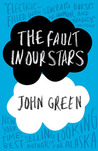
The fault in Our Stars

The Fault in Our StarsThe Fault in Our Stars by John Green
Raw.
It's a word I admittedly overuse when i find a piece of literature that is, in fact, not over processed, overly pretentious or trying too hard - as books an do. The fault in Our Stars -which I finally succumbed to reading after much hype by blogging fans for ages - is raw in a very poignant way. The fault in our stars is certainly romantic, and in it's romance dances into the idealistic forms of love - I won't spoil it for potential readers, but there's a level of convenience inherent in the way romantic love plays out within the novel - but it does generally keep itself honest and real. Hazel Grace, our 16 year old main character, is a thoughtful, interesting - odd - but very much teenager main character. While her cancer makes her whole unique from your average teen, Green does a great job of exemplifying that she is, in turn, just as teenagerly, and just as much the same as any other non cancer inflicted individual. We are all human, finite, and experience pain and loss.
But the depth and clarity with which Green address cancer - the "suckyness" of it, the agony that really isn't brave, but breaking and sad - not tragic or poetic - just sad, adds so much merit to the tale.

While there are moments where Green pulls aspects of the 'cancer story' he is careful to tell Hazel's story - and individual tale of a young girl who happens to have a fatal disease, rather than the story of Cancer, featuring Hazel Grace. The novel itself focusing around this distinction, determined to illuminate the humanity and normalcy of people while at the same time taking nothing away from the sheer unfair awfulness that is growing up with Cancer. Hazel is real, she is 'raw' and she is likeable, even in her sometimes depressing realism. The reader immediately grows to like her, is invested, and I myself found the novel an exceptionally quick read.

A well written story of friendship and love, sickness, fatality and the coming to terms with the fact that we all, one day, must die. And while we may have but a short time together, that time - those moments, can be infinite.

Monday, December 2, 2013

One Hundred Years of Solitude

I essentially read this book because it's on every list of Books One Should Read Before They Die, and it sounded far more interesting than many of the extremely old 'canon' pieces of yonder years that inevitably take up prominent spots on such lists.
..
well, it was certainly not in the 18th Century style, but that didn't mean it wasn't a bit drawn out, halting and muddled.
To be honest I think the main issue was the characters were flippant within the story, passing in and out at random, unfixed in time on occasion, and confusing not only chronology, but relations and generations. This was not helped by the fact that every male in the novel of the Buendía family has (essentially) on of two names, either Aureliano or (Jose) Arcadio. it's a bit confusing. Granted, I see the significance of this odd narrative, and of the repeat of names, as history was seen to be circling back on itself, patterns in generations repeating and overlapping and confusing one another. In this way, the novel was brilliantly successful in mirroring life in narrative. However, it didn't make it particularly comprehensive, and I often found myself less engaged than I would have liked to be.

At it's core, 100 years of Solitude is a recounting of the history of one family- occasionally with meaningful, heartfelt stories, sometimes in minute detail, but often illuminating love and solitude, and the partnership that these feelings often share. The novel to me became the recounting of the latest 'ursula' or 'remedies' or 'aureliano' (yes many of the daughters were named after mothers or grandmothers as well), who they slept with - often wildly inappropriately, or out of sheer solitude, any resulting children, and a spiral into quiet sad solitude. This pattern, repeated again and again, had the markers of deep life lessons, but also became somewhat tedious for the reader.

in essence, I appreciated the novel, but I did not, in the end, find it overly engaging, moving or 'entertaining'. Rather it was dirty, real, unpolished poetry, which at times lagged, and at time showed glimpses of both the purity, and dark twisted animalisms that form the basis of humanity.

Tuesday, October 1, 2013

The Understudy

The Understudy, by David Nicholls (One Day, Starter For Ten) is a painfully realistic tale about one Steven C McQueen, a pained divorcee, struggling actor and hopelessly unlucky understudy to the increasingly famous and dreamy Josh Harper. Steven is an endearing character. Real, flawed, and often foolish, we follow his naively optimistic dreams of making it big in the world of theatre. The reality, of course, is that Steven is floundering along, too old to still be waiting for his big break, slowly sinking beneath the shadow of the stars.

But when Steven inadvertently mistakes Josh's job offer of catering services as a personal party invitation, Steven's life is shot into the twisted glamourous and yet oh so dark world of fame. It is Nora, Josh's wife, that really does it for Steven. One chance meeting and they fall quickly into a strange and loaded friendship as Steven becomes Josh's confidant. Caught between spouses, making friendships with those he envies, Steven struggles to navigate through a life continually riddled with ever increasing disappointment.

Nicholls' dark dry humour paints the scene for Steven's self deprecation and careful optimism, countered with the brash roughness of Nora's New York style which (not so delicately) highlights the rough side that is fame and fortune. One reaching for the dream, the other a grounding sense of reality, Nicholls expertly manoeuvres his way through the busy London streets, debaucherous start studded after parties, and rundown apartments engaging the reader with a sense of hoping and looming misfortunate. A real, human story, one cannot help but invest their own aspirations, disappointments and veiled selfish desires in Steven, and thus, connect wholeheartedly with his story.

Wednesday, September 18, 2013

Eleanor Rigby


Eleanor Rigby, by Douglas Coupland, jumps straight into the life of middle-aged, single Vancouverite Liz Dunn in a whirling tail of loneliness, breakdown, and the Human Condition. Unsugar coated, blunt and open, Coupland never shies away from the bigger issues of life hitting the reader with cases of MS - depicting quite honestly the crippling loss of self that chips away inexplicably at those effected. It is a blunt and therefore all the more effective look at sickness, human frailty and perseverance whilst incorporating the overarching themes of life, death, life after death, and inevitability of mortality.

Between the charming Jeremy who dreams of a simple working life on a farm to the office working Liz trapped in the cage of her own loneliness, the two begin to build a life together two halves thoroughly dependant on the other for more than happiness, but in many ways, survival. Coupland depicts perfectly the relations between the two as well as other characters, building a frighteningly real life wrought with the trials and small triumphs of Liz's life at 40. While seeing glimpses of her early years, it is the slow passing of her life up until the point she meets Jeremy that builds the foundation for the novel, constructing a crippling sense of self-inflicted isolation and lonely a condition mirror in a physical sense by the symptoms and complications of Multiple Sclerosis and their effect on one's body.

Coupland so easily paints the picture with such finite believability and detail that characters immediately become real, and true, a connection forming between them and the reader as you follow through their daily and (often monotonous) lives, all the while growing to love them more and more with each stumble, mistake or moment of happiness. Raw and rule, Eleanor Rigby is a true reminder of the importance of real connections, relationships, within the context of the both limited and fragile human life.

Monday, July 15, 2013

And the Mountains Echoed

Khaled Hosseini is superb, and continues to wow in this, his third novel. An expert at weaving a multitude of stories and characters into one cross-continental tale, Hosseini grabs his readers immediately and doesn't let go. Raising hopes,and leaving the reader crushed under the weight of tragic life - a reality he carefully avoids glorifying - Hosseini once again opens a window into characters lives, bit by bit, and makes you, inevitably and despite their flaws, love them. As the reader watches the slow decay of life unfurl before their eyes they are gripped by the tale of familial bonds, and deep rooted kinship that is not defined by local - be it Afghanistan, America, Paris, or Tinos. Human frailty, its capacity for love, and inevitably, fail those we love runs deep within the pages of ANd the Mountains Echoed.

The story opens upon a simple scene of storytelling, a glimpse at the relationship between the father (the speaker) and son, (the listener) while widening the ideas of family relations and obligations in the very theme of the story told. From there we are given a window into the lives of two young children - brother and sister - and the solidifying of a central them throughout the novel to come: bonds and ties of family and friendship that endure despite time or place. It is a story about finding a piece of one's self in another, and the inexplicable connections of love that tie us together.

Through heartache, trial triumph and testing, Hosseini explores relationships between parents and their children - touching on the loved, the difficult, biological families and adopted ones, in order to explore the depth of affection and loyalty inherent in such relations. There is a sense, too, for the characters of And the Mountains Echoed, that it is never too late. Whether it is Pari the young girl removed from her family at such a very young age, who - unable to remember anything but her adopted mother - lives her life with a vague, uncertain, but ever present ache; a hole undefinable of the place where something is missing from her soul, or Markos - ever running from the confines of his life, so rigid and void of tenderness, on the secluded island of Tinos, Hosseini weaves them each in turn, and the generations of family members and friends they connect with, into realistically jumbled, but ever connected tapestry.

It is a testament, also, that Hosseini is able to create such a balance - such reality. Never one to wrap everything up all nice and neat in perfect triumph or resolution, he also manages to avoid the opposite mistae of over glorifying the hardships and tragedies of poverty and circumstances. Each character is flawed, and each is redeemable, but only within the realities and confines of their lives and character. It is a masterpiece of a could-be reality. Like the works of Hosseini that came before, And the Mountains Echoed will grip your heart, and leave its resonating sound within you well after the final page has been read.


Friday, February 1, 2013

Sherlock

Sherlock Holmes, the iconic detective character. Sir Arthur Conan Doyle has managed to create a character that withstands the test of time, and, in recent years, seems to only be growing in popularity. From the Blockbuster starring Robert Downey Jr. and Jude Law (an impeccable match) or the BBC modern day series simply titled 'Sherlock' starring Benedict Cumberbatch and Martin Freeman, the Memoirs and Adventures of Sherlock Holmes live on.

Having recently read a large number of the iconic stories, I must admit, it makes sense to see so many of the plots adapted to screen - they are intriguing riddles which lend themselves far better to film than to print. Because really, being told in point-by-point factual reports of the minute details which lead to discovery is not entirely suspenseful or exciting. Sure, there is interest and intrigue and most definitely a sense of awe, but it's a report. It's not a... story.

So it seems that it is the mystery of how Sherlock can be so effortlessly observant, the question of the character himself rather than each individual storyline. We are captured by him, and his unusual character and, in turn, the humourous relation between himself and Watson, far more than we care to know 'who-done-it'. And thus, Sherlock becomes the perfectly malleable, transient character. You can move him through time and era effortlessly, changing crime and mystery to fit. Because that's not the part the matters to us. We, like Watson, simply want to watch the genius at work.


Saturday, September 29, 2012

Everything Remains Dark

Browse Tumblr for more than 30 seconds, and I'll beat you'll come across some reference to Jonathan Safran Foer - most likely, a non-creative posting of cover photos of Everything is Illuminated and Extremely Loud and Incredibly Close scrawled in bright vibrant letters. See cover here And, I must admit, the poppy type-art simplicity, was a good seller for me. While both novels continue to circle the Literary cult cultures with quotes and trendy 'likes' I'd be lying if I said I actually knew much of anything about this novel aside from the time I was ready to watch anything Elijah Wood was in and came across his smiling sunflower-glassed visage at Blockbuster. I never did watch the movie though, so it was blindly that I dove into the pages of Everything Is Illuminated this September with no frame of reference for plot, style or literary context.
Long story short - I had no idea what the book was really about, except that Lit-hips loved it.

Taking place in the Ukraine - which might explain the bright blue and yellow, at any rate, the novel follows two or three timelines that weave their way (occasionally connecting) through the rural Ukrainian villages. The first, most 'present-day' story is that of Sasha, a small town Ukrainian young man longing for America, and a life bigger than that which he leads. Manufacturing tales and encounters that boost his image, he rattles off depictions of his daily grand life with poignant humour and charmingly broken english. Capturing that fluent but not North American style of speaking and writing, Safran immediately gains the readers trust through the voice of Sasha, and establishes a relationship where the reader is firmly on his side, and rooting for his success and happiness.

Shortly into this we meet Jonathan Safran Foer the character - an American travelling through the Ukraine in search of one woman from an old photograph, and a connection to his past: the one who saved his father's life during the second world war.

And that's about where my comprehensive overview ends.

Weaving in and out of this present day story - which itself is told partly in the moment, and in part through recounting letters from Sasha to Jonathan after the fact - are tales of the past. The relatives Jonathan is seeking to gain knowledge of have their own chance to tell a story - a stumbling and halting history of their village, and the individuals and encounters which occurred there.

Though in theory the reader is able to keep histories separate, the manner in which each is introduced and revealed leaves much to the imagination, and tends toward simple confusion. I often found myself trying to decipher who was who and related in what way, what time period/frame of the novel I was in, and just what the heck was actually going on.

Because of this, the novel quickly became muddled, confusing, and frustrating. Though there were certainly moments where the reader could sympathize with the characters of the novel, the disconnect of the stories and the narrative style prevented continuity or emotional attachment at the level which the story needed. Without it, the weight of character's emotional baggage, war trauma, and inner turmoils fall flat, missing the reader all together on their downward spiral into muddled reality and confused plot lines.

Rather as though bits an pieces of the novel were left out, revelations and conversations would occur in the novel without explanation or backstory to provide either context or relevancy. As such, I often found myself frustrated with entire sections of the novel, unable to connect to one character or another, or piece together the significance of one story in relation to another.

While I could grasp at the thought that the miss-mash of stories is a commentary or depiction of the way in which history circles, or memories blur in the minds of both individuals and nations - pulling this all together in the collective frame of reference of Jewish life in the Second World War - I'd have to say that's the type of stretch more commonly found in the pages of a second year English Major's dashed together analytic essay. It's time to face the music. Parts of the novel held merit, but as a collective book, it fell short.

I'm not saying each and every aspect needs to be explained in full detail, or that backstories need be outlined for every anecdote, but when the reader is left with an overwhelming feeling of 'so what' or, 'how does this relate to anything again?' you know that something's missing. Finishing the novel with an overwhelming sense of frustration, I have to admit I was disappointed. Sure, Safran illuminates some honest, blunt truths here and there, but generally speaking, I found the very title of the novel a wild irony (the one thing I can say just may have been deliberate) and the resounding conclusion lingering darkness.
And I'm not really sure what to do in the dark.

Wednesday, May 16, 2012

Starter For Ten

"All young people worry about things, it's a natural and inevitable part of growing up, and at the age of sixteen my greatest anxiety in life was that I'd never again achieve anything as good, or pure, or noble, or true, as my O-level results."


A poignant and raw look into the inner workings of the eighteen year old Brian Jackson, upon his entry into University, Starter For Ten by David Nicholls is not so much a straight forward coming of age as it is an uncovering of what University life really is about - what knowledge means, and the lessons school cannot teach you. Inherantly smart and hard working, Brian is a rather typical book-smart student lacking the comfort and ease of social structure and easy friendships. But behind the simple structure of his character is the burning desire to bring pride to his mother and deceased father, and clinging to knowledge - specifically University Challenge which he connects inadvertently to memory of his dad, and  longing for love and acceptance from the University sweetheart "beautiful and knows it" Alice.


Brian has big dreams for University - and high expectations. Ever focused on school work above all else, it is his sole belief that hard work and dedication will bring him the future he desires. This humorous and ironic passage depicts not only Brian's hopes for the future, but more poignantly, his sheer lack of understanding of how the world really does work.


“I want to be able to listen to recording of piano sonatas and know who's playing. I want to go to classical concerts and know when you're meant to clap. I want to be able to 'get' modern jazz without it all sounding like this terrible mistake, and I want to know who the Velvet Underground are exactly. I want to be fully engaged in the World of Ideas, I want to understand complex economics, and what people see in Bob Dylan. I want to possess radical but humane and well-informed political ideals, and I want to hold passionate but reasoned debates round wooden kitchen tables, saying things like 'define your terms!' and 'your premise is patently specious!' and then suddenly to discover that the sun's come up and we've been talking all night. I want to use words like 'eponymous' and 'solipsistic' and 'utilitarian' with confidence. I want to learn to appreciate fine wines, and exotic liquers, and fine single malts, and learn how to drink them without turning into a complete div, and to eat strange and exotic foods, plovers' eggs and lobster thermidor, things that sound barely edible, or that I can't pronounce...Most of all I want to read books; books thick as brick, leather-bound books with incredibly thin paper and those purple ribbons to mark where you left off; cheap, dusty, second-hand books of collected verse, incredibly expensive, imported books of incomprehensible essays from foregin universities.
At some point I'd like to have an original idea...And all of these are the things that a university education's going to give me.”


Set from 1985-86, the novel is a commentary on social class and societal structure, often addressing Brian's understandings of money and privilege (shown in both the character of the seemingly perfect Alice and various boarding-school types) in contrast to his own working-class single parent upbringing (his father having died when Brian was 12). No where is anti-classism more evident, though than in the brash, passionate character of Rebecca who through a chance meeting at a party becomes in an awkward, Brian way, one of Brian's closest (and indeed one of few real) friends. Relying heavily on Brian's self deprecating wit and humour, manifested primarily in his narrative (first person) voice, and Rebecca's hard edged honesty and banter, Nicholls adds a light and admittedly very funny tone to the would-be heavy novel. There is an obliviousness, and an extremely narrow sighted optimism in Brian which drives not only his actions but the manner in which he sees - and therefore narrates - the world around him.


Despite a keen interest in his studies and efforts otherwise, Brian very quickly finds himself an outsider, marking this down to class difference and upbringing more than anything else. Reflecting on his own lack of personal connections, he contrasts his way of life with that of Alice's, as she states she enjoys her independence, realizing in doing so, just how alone he has become:


"Independence is the luxury of all those people who are too confident, and busy, and popular, and attractive to be just plain old lonely. And make no mistake, lonely is absolutely the worst thing to be. Tell someone that you've got a drink problem, or an eating disorder, or your dad died when you were a kid even, and you can almost see their eyes light up with the sheer fascinating drama and pathos of it all, because you've got an issue, something for them to get involved in, to talk about and analyse and discuss and maybe even cure. But tell someone you’re lonely and of course they’ll seem sympathetic, but look very carefully and you'll see one hand snaking behind their back, groping for the door handle, ready to make a run for it, as if loneliness itself were contagious. Because being lonely is just so banal, so shaming, so plain and dull and ugly."


Brian has lived the majority of his life with people grasping for the door handle, but for so long has not been able to see it. As his paper-perfect University career begins to spin around him, odd friendships, failed relations, let downs and confrontations lead Brian to discover that though he might be full of knowledge worthy of quiz shows, he is, inevitably, ignorant to the world in a manner far beyond his comprehension, and, indeed, doesn't even know who he is. 


“I contemplate the idea that maybe I'm an alcoholic. I get this occassionally, the need to define myself as something-or-the-other, and at various times in my life have wondered if I'm a Goth, a homosexul, a Jew, a Catholic or a manic depressive, whether I am adopted, or have a hole in my heart, or possess the ability to move objects with the power of my mind, and have always, most regretfully, come to the conclusion that I'm none of the above. The fact is I'm actually not ANYTHING.”


A realist often sarcastic and extremely humorous novel, Starter for Ten outlines not only the base lines of lasting grief and inherent loneliness, but the meanings of friendship, the awkwardness of young adult relations, and ultimately, the true value of knowledge (and whether or not knowledge is really the same thing as intelligence).